
What is a Dynamic Warm-Up?
Dynamic warm-ups, unlike static stretching, prepare the body for exercise with controlled movements; a PDF guide can detail these routines for optimal pre-workout preparation.
Definition and Purpose
Dynamic warm-ups involve controlled, sport-specific movements that gradually increase body temperature, blood flow, and range of motion. Unlike static stretching – holding a stretch for a prolonged period – dynamic movements actively prepare muscles for exertion. A dynamic warm-up PDF serves as a readily accessible resource, outlining a sequence of exercises designed to mimic the demands of the upcoming activity.
The primary purpose is to reduce injury risk by enhancing muscle elasticity and joint mobility. These warm-ups also improve neuromuscular efficiency, optimizing the communication between the brain and muscles. A well-structured PDF will detail how to perform each exercise correctly, ensuring maximum benefit and minimizing potential for improper form, ultimately leading to better performance.
Why Dynamic Warm-Ups are Superior to Static Stretching
Dynamic warm-ups are now favored over static stretching before exercise due to their ability to actively prepare muscles for activity. Static stretching, particularly when performed in isolation, can temporarily decrease muscle power and performance. A comprehensive dynamic warm-up PDF illustrates this shift in training philosophy, providing routines that enhance, rather than hinder, athletic capabilities.
Research indicates dynamic movements improve neuromuscular function and range of motion more effectively. A PDF guide will demonstrate how dynamic exercises mimic workout movements, priming the body for specific demands. This contrasts with static stretching, which doesn’t replicate the movements of the activity. Utilizing a PDF ensures consistent, effective preparation, minimizing injury risk and maximizing performance gains.

Benefits of Dynamic Warm-Ups
Dynamic warm-ups, detailed in a helpful PDF, reduce injury risk, boost performance, and increase range of motion – preparing the body effectively.
Injury Prevention
Dynamic warm-ups, often outlined in a comprehensive PDF guide, significantly reduce the risk of injuries by preparing muscles, tendons, and ligaments for the demands of exercise. Unlike static stretching, which can temporarily decrease muscle power, dynamic movements increase blood flow and elasticity.
A well-structured PDF will demonstrate how these movements mimic the actions of the workout, progressively increasing range of motion and activating stabilizing muscles. This proactive approach minimizes strain and potential for tears or sprains. Football-related injury prevention specifically benefits from dynamic exercises, as highlighted in recent studies. Following a PDF’s instructions ensures proper form and maximizes protective benefits, leading to safer and more effective training sessions.
Improved Performance
A dynamic warm-up PDF isn’t just about avoiding injury; it’s a key component of maximizing athletic performance. These routines, unlike traditional static stretching, actively prepare the neuromuscular system for exertion. By increasing blood flow and muscle temperature, a PDF-guided warm-up enhances muscle contraction speed and power output.
The controlled movements detailed in a quality PDF improve coordination and agility, allowing for more efficient and effective workouts. Experts emphasize that pre-workout preparation is crucial, and dynamic exercises are superior for this purpose. Utilizing a PDF ensures consistency and proper execution, translating to better results and a more productive training session, ultimately boosting overall athletic capability.
Increased Range of Motion
A well-structured dynamic warm-up PDF focuses on movements that actively increase joint mobility and range of motion. Unlike static stretches which can temporarily reduce power, dynamic exercises prepare joints for the full spectrum of motion required during exercise. A PDF guide ensures you’re performing the correct movements to target specific muscle groups and joints.
This improved mobility, detailed within a PDF resource, translates to better form, reduced risk of strain, and enhanced athletic performance. The exercises gently challenge the muscles and connective tissues, preparing them for more demanding activity. Following a PDF’s instructions consistently will lead to noticeable improvements in flexibility and overall movement efficiency, optimizing workout effectiveness.
Key Components of a Dynamic Warm-Up
Dynamic warm-up PDFs typically include cardiovascular activation, joint mobilization, and muscle activation exercises, all designed to prepare the body efficiently for activity.
Cardiovascular Activation
Cardiovascular activation is a crucial first step detailed in many dynamic warm-up PDF guides. It gently elevates your heart rate and increases blood flow to the muscles. This prepares your body for more intense activity, mimicking the demands of your upcoming workout.
Examples often found within these guides include light jogging in place, jumping jacks, or high knees. The goal isn’t exhaustion, but rather a gradual increase in body temperature and circulation. A well-structured PDF will specify durations – typically 2-5 minutes – and suggest modifications for different fitness levels. This phase primes the musculoskeletal system, enhancing flexibility and reducing injury risk, setting the stage for effective dynamic movements.
Joint Mobilization
Joint mobilization exercises, prominently featured in comprehensive dynamic warm-up PDFs, focus on increasing the range of motion in key joints. These movements lubricate the joints and prepare them for the specific demands of your workout. A good PDF guide will illustrate controlled, pain-free movements.
Common examples include arm circles, leg swings, torso twists, and hip rotations. These aren’t stretches held for extended periods, but rather fluid, controlled motions. The PDF should emphasize proper form to avoid strain. Typically, this section lasts 3-5 minutes, progressively increasing the range of motion with each repetition. Effective joint mobilization, as detailed in these guides, significantly reduces the risk of injury and improves overall movement efficiency.
Muscle Activation
Muscle activation, a crucial component detailed within a dynamic warm-up PDF, involves exercises designed to “wake up” the muscles you’ll be using during your workout. These aren’t about fatigue, but rather about neurological priming – signaling your muscles to prepare for action. A well-structured PDF will categorize exercises by muscle group.
Expect to find movements like glute bridges, bird dogs, and light band walks. These exercises increase blood flow and improve muscle recruitment. The PDF should clearly demonstrate proper form and suggest appropriate rep ranges. This phase, typically lasting 5-10 minutes, enhances performance and reduces injury risk by ensuring muscles are actively engaged before heavier loads or intense activity are introduced. Prioritizing activation, as shown in these guides, is key.

Dynamic Warm-Up Exercises for Full Body
Full-body routines, often found in a dynamic warm-up PDF, integrate lower and upper body movements alongside core work for comprehensive preparation before exercise.

Lower Body Dynamic Stretches
Lower body dynamic stretches, frequently detailed within a comprehensive dynamic warm-up PDF, are crucial for preparing legs and hips for activity. These movements enhance flexibility and blood flow.
Common exercises include leg swings (forward and sideways) to improve range of motion in the hamstrings and adductors. Walking lunges with a twist engage glutes, quads, and core, promoting stability.
Furthermore, high knees and butt kicks elevate heart rate and activate key muscle groups. A well-structured PDF will often illustrate proper form and provide modifications for varying fitness levels, ensuring safe and effective preparation for workouts.
Leg Swings (Forward & Sideways)

Leg swings, a staple in many dynamic warm-up PDFs, effectively increase hip mobility and prepare the hamstrings and groin for exercise. Forward leg swings involve controlled movements, swinging one leg forward and backward, while maintaining core stability.
Sideways leg swings target the inner and outer thighs, enhancing adductor and abductor flexibility. A detailed PDF guide will emphasize maintaining a straight back and controlled motion, avoiding jerky movements.
These exercises improve range of motion and blood flow, reducing injury risk. Proper execution, as demonstrated in a PDF, is key to maximizing benefits and preventing strain.
Walking Lunges with a Twist
Walking lunges with a twist, frequently featured in dynamic warm-up PDFs, are a fantastic full-body exercise. They combine lower body strength with core and spinal mobility. As you lunge forward, rotate your torso towards the front leg, engaging your obliques and improving rotational power.
A comprehensive PDF guide will highlight maintaining a straight back and controlled twist, avoiding over-rotation. This exercise prepares the body for activities requiring lateral movement and core stability.
Proper form, detailed in a PDF, is crucial to prevent lower back strain and maximize the benefits of this dynamic movement.
High Knees & Butt Kicks
High knees and butt kicks are staple exercises often included in dynamic warm-up PDFs, focusing on lower body activation and cardiovascular preparation. High knees involve bringing your knees as high as possible towards your chest, while butt kicks focus on bringing your heels up towards your glutes.
A well-designed PDF will emphasize maintaining a quick tempo and proper form – a slight forward lean for high knees and a controlled, rhythmic motion for butt kicks. These movements increase blood flow to the legs and improve muscle elasticity.
PDF guides often suggest performing these drills for a set distance or time, enhancing pre-workout readiness.
Upper Body Dynamic Stretches
Dynamic warm-up PDFs frequently include upper body stretches to prepare shoulders, arms, and the torso for activity. These aren’t static holds, but controlled movements increasing range of motion and blood flow;
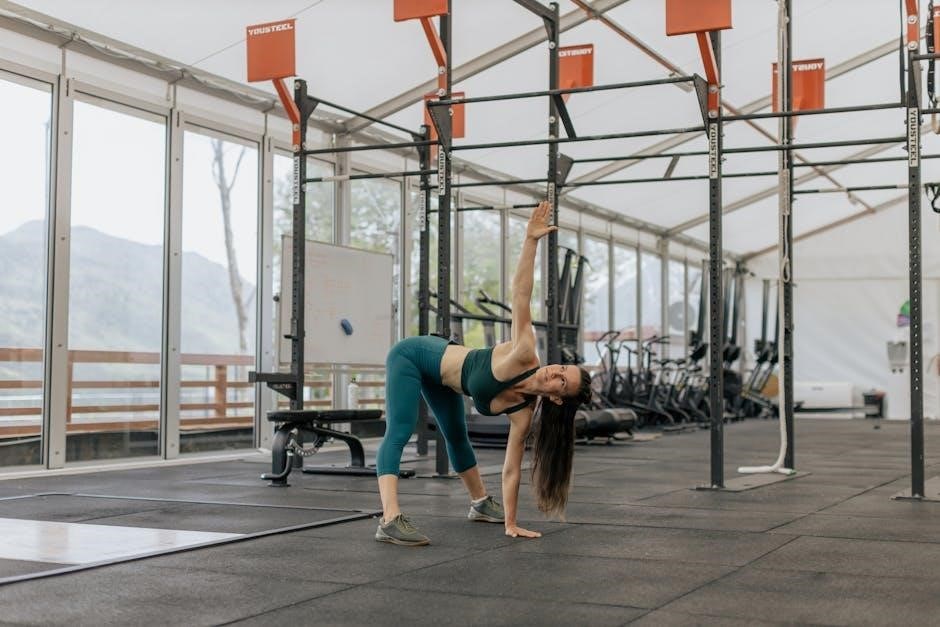
A comprehensive PDF guide will detail exercises like arm circles – both forward and backward – to loosen shoulder joints. Torso twists are also common, enhancing spinal mobility and core engagement. Shoulder rotations, performed gently, further prepare the upper body.

These stretches, as outlined in a quality PDF, are crucial for injury prevention and improved performance in activities requiring upper body strength and flexibility.
Arm Circles (Forward & Backward)
Dynamic warm-up PDFs consistently feature arm circles as a foundational upper body exercise. These are performed by rotating the arms in small, controlled circles, first forward and then backward.
A detailed PDF guide will emphasize starting with smaller circles, gradually increasing the diameter as muscles warm up. This movement improves shoulder joint mobility and increases blood flow to the deltoids and rotator cuff muscles.
Many PDFs suggest performing 10-15 repetitions in each direction. Proper form, maintaining a relaxed shoulder position, is highlighted within these resources for optimal benefit and injury prevention.
Torso Twists
Dynamic warm-up PDFs frequently include torso twists as a key component for core and spinal mobility. These are executed by gently rotating the upper body from side to side, keeping the feet planted and core engaged.
A comprehensive PDF guide will instruct users to maintain a slight bend in the knees and avoid forcing the rotation. The focus is on controlled movement, enhancing flexibility in the spine and obliques.
Typically, PDFs recommend 10-15 repetitions on each side. Some guides suggest adding a light resistance, like a medicine ball, to increase the intensity as fitness improves, promoting a more robust warm-up.
Shoulder Rotations
Dynamic warm-up PDFs consistently feature shoulder rotations to improve joint mobility and prepare the upper body for activity. These involve circular movements of the shoulders, both forward and backward.
A well-designed PDF guide will emphasize maintaining a relaxed posture and controlled speed. It often details performing both small and large rotations to target different muscle groups and ranges of motion.
Most PDFs recommend 10-15 repetitions in each direction. Variations, like alternating forward and backward rotations, are also commonly included to enhance the warm-up’s effectiveness and prevent injury.
Core Activation Exercises
Dynamic warm-up PDFs frequently incorporate core activation exercises to stabilize the spine and enhance overall movement efficiency. These exercises prepare the core muscles for the demands of the workout ahead.
A comprehensive PDF guide will typically include bodyweight squats and plank variations, such as plank taps, as foundational movements. These exercises engage multiple core muscles simultaneously.
The PDF will likely detail proper form cues, emphasizing maintaining a neutral spine and controlled movements. Repetition ranges are usually specified, often around 10-15 repetitions per exercise, to effectively activate the core without causing fatigue.
Bodyweight Squats
Dynamic warm-up PDFs consistently feature bodyweight squats as a crucial core activation exercise. These squats prepare the lower body and core for more intense movements, enhancing stability and power.
A well-designed PDF guide will illustrate proper squat form: feet shoulder-width apart, chest up, and back straight. It will emphasize controlled descent, aiming for thighs parallel to the ground, and a powerful return to the starting position.
The PDF may suggest variations like pulse squats or jump squats to increase intensity. Typically, 10-15 repetitions are recommended, focusing on quality of movement over speed, ensuring effective core engagement and muscle activation before the workout.
Plank Variations (e.g., Plank Taps)
Dynamic warm-up PDFs often incorporate plank variations to activate the core and improve stability. These exercises are excellent for preparing the body for movements requiring core strength and control.
A comprehensive PDF guide will demonstrate proper plank form – a straight line from head to heels, engaging the core and glutes. Plank taps, where you alternate tapping shoulders, are a common dynamic variation.
The PDF may also include side planks or plank with leg lifts to target different core muscles. Holding each variation for 30-60 seconds, or performing 10-15 taps per side, is generally recommended, focusing on maintaining proper form throughout the exercise.

Creating a Dynamic Warm-Up PDF
Dynamic warm-up PDFs should include clear exercise instructions, images, and suggested sets/reps, ensuring accessibility and effective pre-workout preparation for all fitness levels;
Essential Elements for a PDF Guide
A comprehensive dynamic warm-up PDF requires several key components to maximize its usefulness. Firstly, each exercise must have a clear, concise description detailing the proper form and technique. High-quality images or even short video links demonstrating the movement are crucial for visual learners and to prevent injury from incorrect execution.
Secondly, the PDF should categorize exercises by body region (lower body, upper body, core) for easy navigation. Include suggested repetitions and sets, alongside modifications for varying fitness levels – beginner, intermediate, and advanced.
Finally, a brief explanation of the benefits of dynamic warm-ups and why they are superior to static stretching should be included. A disclaimer advising consultation with a healthcare professional before starting any new exercise program is also essential for safety and responsible guidance.
Resources for Finding Pre-Made PDFs
Numerous online resources offer pre-made dynamic warm-up PDFs. Websites specializing in fitness and athletic training, such as those affiliated with sports medicine professionals or certified trainers, frequently provide downloadable guides. A quick search using keywords like “dynamic warm-up PDF,” “pre-workout routine PDF,” or “sports-specific warm-up PDF” will yield many results.
Platforms like SimplyShredded and various university athletic department websites often host free, printable PDFs. YouTube channels dedicated to fitness often link to downloadable resources in their video descriptions. Be sure to evaluate the source’s credibility before utilizing any pre-made PDF, ensuring it aligns with safe and effective exercise principles.

Tailoring Your Warm-Up
Dynamic warm-up PDFs should be customized; sport-specific routines and individual needs dictate exercise selection, duration, and intensity for optimal preparation.
Sport-Specific Dynamic Warm-Ups
A comprehensive dynamic warm-up PDF should emphasize tailoring routines to the demands of the specific sport. For example, a football player’s PDF would prioritize hip mobility and explosive leg movements – incorporating exercises like lateral lunges and sprint drills. Conversely, a swimmer’s PDF would focus on shoulder rotations, torso twists, and dynamic stretches targeting the upper back and core.
These PDFs should detail how movements mimic the actions performed during the sport, enhancing neuromuscular pathways. A well-designed PDF will also include progressions, allowing athletes to gradually increase intensity. Consider including visual aids – images or videos – demonstrating proper form for each exercise, ensuring safe and effective preparation. Ultimately, a sport-specific PDF maximizes performance and minimizes injury risk.
Warm-Up Duration & Intensity
A detailed dynamic warm-up PDF must address appropriate duration and intensity levels. Generally, a warm-up should last between 5-10 minutes, but this varies based on the workout’s intensity and the athlete’s fitness level. The PDF should guide users to start with low-intensity movements, gradually increasing the range of motion and speed.

Intensity should be perceived exertion – feeling warmer and more mobile, not fatigued. The PDF could include a rating of perceived exertion (RPE) scale as a guide. It’s crucial to emphasize listening to the body and adjusting accordingly. A progressive approach, outlined within the PDF, ensures optimal muscle preparation and reduces the risk of injury before commencing the main workout session.